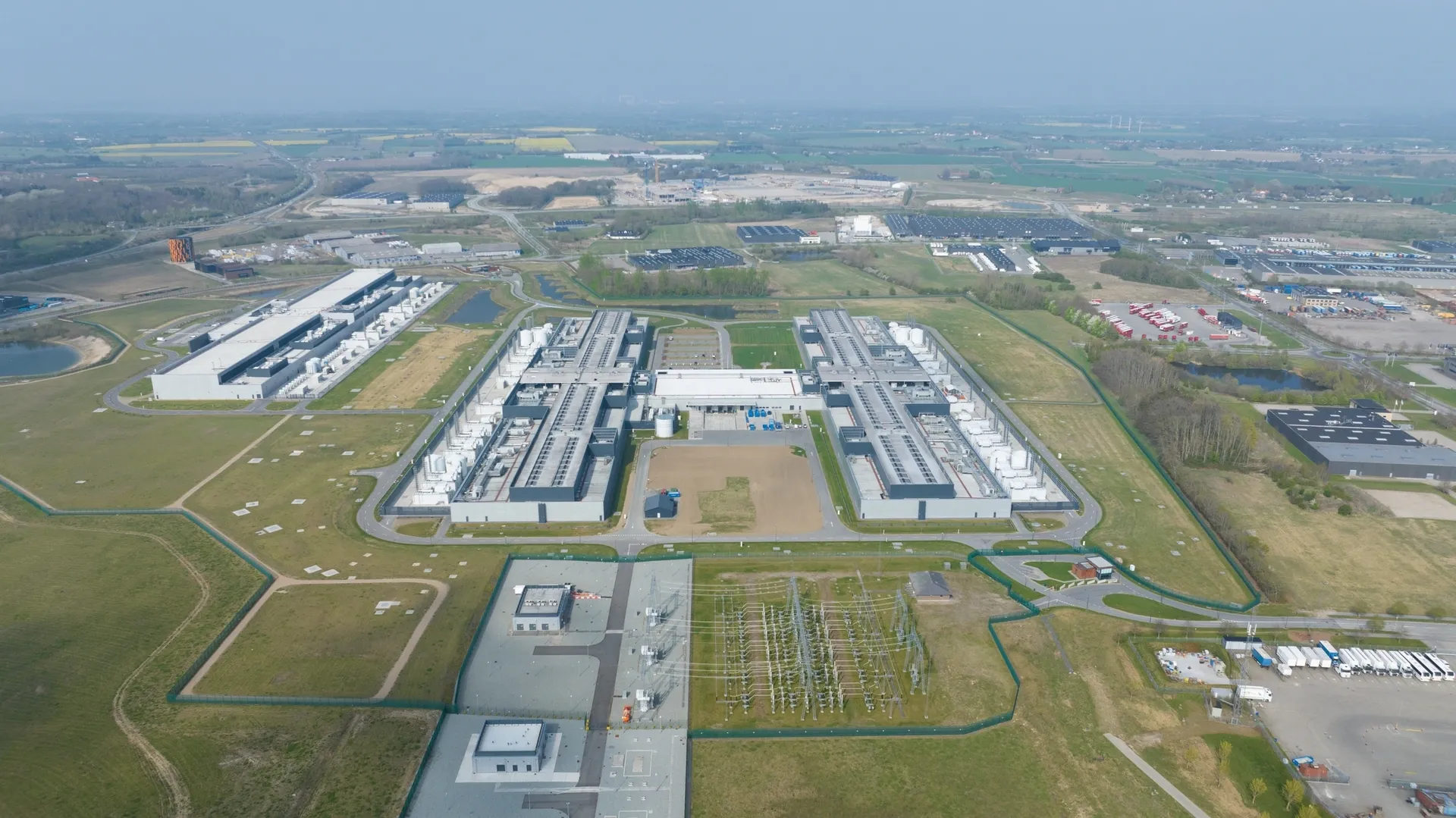
Dunlieh Group · Behind-the-meter and off-grid power

Industrial real estate that brings its own power

Dunlieh is building a vertically integrated power company that develops self-powered industrial real estate. We buy land and buildings, generate their power on site and deliver powered space to data centers and industry.

Design availability

99.99%

Fuel cells plus battery storage

Power

On site

Sized to the buildings it serves

Pricing

Competitive

With the utility’s all-in industrial rate

Factory

Southern CA

Switchgear today; our own fuel cells planned

Anchor fuel

Natural gas

Other fuels under evaluation

What we deliver

Powered land, powered buildings and the plant that powers them

Our team runs every step: we acquire raw land to develop into powered land, and existing buildings to retrofit into higher-powered buildings for advanced manufacturing and data centers; we do the site diligence, secure the fuel and secure the power equipment. Our factory in Southern California integrates switchgear today, and we plan to build our own fuel cells there.

Raw land to powered land

Powered land

We acquire raw land and develop it into powered land: greenfield campuses for data centers and advanced manufacturing, each planned around its own power plant inside the fence.

Example: five campuses in southeast Wyoming, 2,250 MW planned

Existing buildings to higher-powered buildings

Powered buildings

We buy existing buildings and retrofit them into higher-powered buildings for data centers and advanced manufacturing. The shell and site work are already built, so the work goes into power and fit-out.

Example: Rigel, Mississippi, a completed 100,000 SF building with 4.9 MW confirmed and 20 MW of fuel cells planned

Our own power plant

Utility in a box

Our containerized power plant: fuel cells with reserve capacity, battery storage and modular engines on natural gas, designed for 99.99% availability and integrated in our Southern California factory.

Bottom line: we deliver industrial real estate that brings its own power, generated on site and priced to compete with the utility.

See if we can power your site.

Talk to our team
Map of the United States: five power campuses in southeast Wyoming; Rigel, a completed building in Lee County, Mississippi; our factory in Southern California5 CAMPUSESRIGELFACTORY
  • Five power campuses, southeast Wyoming
  • Rigel, a completed building, Mississippi
  • Our factory, Southern California

Where we work

Our projects

Problem solving

Power is the constraint for data centers and industry. We solve it on site: each campus or building gets its own plant, sized to its load, so powered space doesn’t wait on the grid.

Focused approach

Five greenfield power campuses in southeast Wyoming, a completed building in Mississippi, and one repeatable process from land to power.

Explore our projects

Ready to move forward

Ready to size a project? Let’s talk.

Tell us your location, the load you need and your timeline. Our development team will follow up.

Start the conversation

Watch

Our Founder & CEO speaking about our Situla Energy Project, development approach, and benefits to the local community.

Standardize and scale

Next, we standardize the process and scale it across more sites, greenfield and retrofit alike

One repeatable path from land to power, built on a standard power block from our own factory.

Now

The pieces are in hand

Equipment, a factory and our first campus plan.

  • Supplier proposals for the equipment on current projects
  • Switchgear integration in our own factory
  • Five power campuses planned in southeast Wyoming: 2,250 MW

Next

Standardize

One process and one power block.

  • One repeatable process: acquire, diligence, fuel, equipment, integrate, power
  • A standard power block: the utility in a box
  • Our own fuel cells, built in our factory

Then

Scale

More sites, delivered the same way.

  • More greenfield campuses and building retrofits
  • The same process and power block at every site
  • A vertically integrated power company for self-powered industrial real estate

Bottom line: the aim is one product, powered industrial real estate, delivered the same way at every site.

Who we are

About Dunlieh Group

Our vision

We strive to empower our communities by creating energy independence and resilient infrastructure.

Our mission

To build a vertically integrated power company that develops self-powered industrial real estate: land and buildings that bring their own power, generated on site and priced to compete with the utility.

Our team

Decades in power delivery, energy development, capital projects and natural gas. Our leaders have built transmission, generation and capital projects and sourced natural gas at scale, the work this model depends on.

Meet our leadership

Contact

Contact us

    2173 Salk Ave, Suite 250
    Carlsbad, CA 92008, USA

    Let’s build together

    Talk to our development team about your site.

    Whether you’re planning a data center campus, an advanced manufacturing plant or a building retrofit, start the conversation with our team.

    Talk to us

    What we do

    One team runs the whole chain, from buying the land to running the power plant that serves it

    Our team spent decades engineering and building power infrastructure for utilities. We bring that discipline on site: we acquire land and buildings, secure the fuel and the equipment, integrate the plant in our own factory and run it.

    From land to power

    Six steps turn a site into powered industrial real estate; our team leads each of them

    1. Step 1

      Acquire

      Raw land to develop into powered land; existing buildings to retrofit into higher-powered buildings.

    2. Step 2

      Diligence

      Zoning and permits, water, fiber, access and community review of every site.

    3. Step 3

      Fuel

      Natural gas supply and delivery to the site; other fuels under evaluation.

    4. Step 4

      Equipment

      Fuel cells, batteries, engines, turbines and switchgear; supplier proposals in hand.

    5. Step 5

      Integrate

      Utility in a box, assembled with switchgear in our Southern California factory.

    6. Step 6

      Power

      Run the on-site plant and sell its power, priced against the utility’s all-in rate.

    Developing private infrastructure

    What we build

    Raw land to powered land

    Greenfield campuses planned around their own plants

    We acquire raw land and develop it into powered land. Each campus has its generation, storage and substations inside the fence with the buildings, sized to its load.

    Example: five campuses in southeast Wyoming, 2,250 MW planned

    Existing buildings to higher-powered buildings

    Retrofits for advanced manufacturing and data centers

    Finished buildings get a planned on-site fuel-cell plant on natural gas, structured to earn through its own power purchase agreement. The shell and site work are already built, so the work goes into power and fit-out.

    Example: Rigel, Mississippi, a completed 100,000 SF building with 4.9 MW confirmed and 20 MW of fuel cells planned

    On-site power plants

    Utility-grade power inside the fence

    Fuel cells first, then gas turbines at campus scale, with battery storage and a spare unit at every plant. We bring the utility practices our team used for decades to plants we build and run.

    Powered land and buildings near your target markets. Discuss availability and timeline with our development team.

    Discuss requirements

    Acquisition

    Land, buildings and right of way

    Our in-house team acquires raw land and existing buildings, and handles entitlement and right of way for greenfield campuses and retrofits.

    Connectivity

    Fiber, reviewed at every site

    Fiber is part of our diligence on every site, with zoning, permits, water and access. Where dark fiber is lacking, we develop links to connect new campuses to established data center markets.

    Fuel

    Natural gas, secured for every site

    Our fuel team sources natural gas and its delivery to each site, led by more than 40 years in natural gas markets. Natural gas is our anchor fuel; other fuels are under evaluation.

    Talk to us about your build. Discuss availability and timeline with our development team.

    Discuss requirements

    Built by us

    Our design, our factory

    Our factory in Southern California integrates switchgear today. The utility in a box is being integrated there, and we plan to build our own fuel cells at the same factory.

    Today

    Switchgear

    Integration in our own factory

    Now

    Utility in a box

    Being integrated there

    Planned

    Fuel cells

    Built at the same factory

    Bottom line: we control the steps that decide when a building gets its power: the land, the fuel, the equipment and the integration.

    Business model

    We power industrial campuses with on-site generation, priced to compete with the utility

    Fuel cells, battery storage and modular engines on natural gas, sized to the buildings they serve.

    Who we serve

    Large industrial users of power.

    • Data centers, AI and edge compute
    • Advanced manufacturing
    • Other industrial complexes and campuses

    What they get

    Firm power on site, with the building.

    • A plant sized to the design load, with a spare unit
    • Battery storage for ride-through and backup
    • Spare units and batteries in place of a diesel fleet

    How we price

    Competitive with the utility’s all-in rate.

    • Benchmarked to the all-in rate industrial customers pay
    • Natural gas as the anchor fuel; other fuels under evaluation

    Bottom line: customers get firm power on their own schedule, at a price that competes with the utility.

    Every project starts with a conversation.

    Tell us about the load you need, the location and the timeline, and we’ll walk you through what’s possible.

    Talk to us

    Our projects

    Power campuses and buildings, each with its power on site

    Five greenfield power campuses in southeast Wyoming, 2,250 MW planned, and a completed building in Mississippi with utility power confirmed and fuel cells planned.

    Map of the United States: five power campuses in southeast Wyoming; Rigel, a completed building in Lee County, Mississippi; our factory in Southern California5 CAMPUSESRIGELFACTORY
    • Five power campuses, southeast Wyoming
    • Rigel, a completed building, Mississippi
    • Our factory, Southern California

    Where we work

    Our portfolio

    Southeast Wyoming

    Five greenfield power campuses of 330 MW to 500 MW each: 2,250 MW planned, 1,080 MW in the first phases, all generated on site.

    Mississippi

    Rigel: a completed 100,000 SF building in Lee County, with 4.9 MW confirmed in writing by the utility and 20 MW of on-site fuel cells planned.

    Our factory

    Southern California: switchgear integration today; the utility in a box and our own fuel cells next.

    See the campuses

    Southeast Wyoming · On-site generation

    Five campuses in southeast Wyoming: 2,250 MW planned, with the power generated on site

    Our campuses are planned to generate their own power, so the load does not wait on utility capacity.

    Campuses

    5

    Southeast Wyoming

    Planned

    2,250 MW

    Five campuses

    First phases

    1,080 MW

    Phase 1 of the five

    Power

    On site

    Fuel cells, gas turbines and batteries

    Distribution

    2N

    Two feeds to every building

    Southeast Wyoming

    Telesto Power Campus

    420 MW ultimate

    • Phase 1: 300 MW in ten 30 MW data center buildings
    • Phase 2: 120 MW in four 30 MW manufacturing buildings
    • Power: generated on site by gas turbines, with battery storage; utility interconnection planned for backup
    • Land: about 300 acres of greenfield land

    Southeast Wyoming

    Polaris Power Campus

    500 MW ultimate

    • Phase 1: 250 MW in five 50 MW buildings
    • Phase 2: 250 MW in five more 50 MW buildings
    • Power: generated on site by gas turbines, with battery storage; utility interconnection planned for backup
    • Land: about 370 acres of greenfield land

    Southeast Wyoming

    Pollux South Power Campus

    330 MW ultimate

    • Phase 1: 30 MW of edge compute in six 5 MW buildings
    • Phase 2: 300 MW in ten 30 MW buildings
    • Power: generated on site by gas turbines, with battery storage; utility interconnection planned for backup
    • Land: about 230 acres of greenfield land

    Southeast Wyoming

    Pollux West Power Campus

    500 MW ultimate

    • Phase 1: 250 MW on fuel cells
    • Phase 2: 250 MW on gas turbines
    • Buildings: twenty-five 20 MW buildings
    • Power: generated on site, with battery storage
    • Land: about 750 acres of greenfield land in one block

    Southeast Wyoming

    High Plains

    500 MW ultimate

    • Phase 1: 250 MW on fuel cells
    • Phase 2: 250 MW on gas turbines
    • Buildings: ten 50 MW buildings, five in each phase
    • Power: generated on site, with battery storage
    • Land: about 460 acres of greenfield land

    Under NDA

    Locations, site plans and data rooms.

    • The location and the site plan of each campus
    • Further detail on each campus, in its data room
    • Fiber routes and facilities
    Request access
    CampusPhase 1Phase 2UltimatePower on siteLand
    Telesto Power Campus300 MW120 MW420 MWGas turbines; batteriesAbout 300 acres
    Polaris Power Campus250 MW250 MW500 MWGas turbines; batteriesAbout 370 acres
    Pollux South Power Campus30 MW300 MW330 MWGas turbines; batteriesAbout 230 acres
    Pollux West Power Campus250 MW250 MW500 MWFuel cells, then gas turbines; batteriesAbout 750 acres
    High Plains250 MW250 MW500 MWFuel cells, then gas turbines; batteriesAbout 460 acres
    Five campuses1,080 MW1,170 MW2,250 MWGenerated on siteAbout 230 to 750 acres each

    Power on the campus

    The load does not wait on utility capacity.

    • Generation on the campus: fuel cells and gas turbines, with battery storage
    • Generation, storage and substations inside the fence with the buildings
    • A utility interconnection is planned for backup at three of the five

    Every building

    Two feeds, A and B, at 34.5 kV.

    • 2N distribution to every building
    • Buildings of 20 MW to 50 MW
    • 5 MW edge compute buildings on one campus

    The sites

    Greenfield campuses of about 230 to 750 acres.

    • Gas: an interstate pipeline in the region
    • Fiber: regional and long-haul carriers
    • No state corporate or personal income tax; sales-tax exemption on qualifying data center equipment

    Bottom line: five campuses in southeast Wyoming, 2,250 MW planned, each to generate its power on site; locations, site plans and data rooms are available under NDA.

    Indicative and for discussion only; not an offer to sell or lease any property or security. Capacity, acreage, dimensions and timing are estimates and are subject to due diligence, utility studies and permitting. Power is to be generated on site; a utility interconnection for backup is subject to the utility’s studies and agreements. No representation is made that any capacity or date will be achieved.

    Mississippi · Completed building

    Rigel: 4.9 MW confirmed under a completed 100,000 SF building, with 20 MW of on-site fuel cells planned

    A completed industrial building on a 40-acre site in Lee County, Mississippi, with a target ramp to 27 MW of utility supply.

    Rigel · Lee County · MS · Prentiss County EPA

    Day-one power

    4.9 MW

    Confirmed in writing by the utility

    On-site power

    20 MW

    Fuel cells, target March 2027

    Ramp target

    27 MW

    Adjacent substation, end of 2027

    Building

    100,000 SF

    Completed, 250 × 400 ft

    Site

    40 acres

    Lee County, on US-45

    Map of Mississippi showing the general site area of Rigel, north of Tupelo in Lee CountyTupelo areaMISSISSIPPI
    General site area on US-45 north of Tupelo, Lee County. Address under NDA.

    Location

    An established industrial park.

    • Lee County, Mississippi, with neighboring occupiers, not raw ground
    • Four-lane US-45 frontage, 20 minutes from downtown Tupelo and Tupelo Regional Airport
    • TVA public-power territory, served by Prentiss County Electric Power Association

    Speed to power

    4.9 MW on day one, with a ramp.

    • 4.9 MW confirmed in writing by the serving utility; we target service in December 2026
    • Target: about 8 to 10 MW on the existing feeder, then 27 MW via the adjacent substation by the end of 2027
    • On site: 20 MW of fuel cells behind the meter, targeted for March 2027

    Building and connectivity

    A completed shell, ready for fit-out.

    • 100,000 SF, 250 × 400 ft, on a 40-acre site with expansion land
    • 30 ft eave, 50 × 75 ft column spacing, four dock doors and one drive-in
    • C Spire fiber in Saltillo and Tupelo; the Memphis long-haul hub about 100 miles by I-22
    • Municipal natural gas, water and sewer

    Bottom line: a completed building with 4.9 MW confirmed in writing, 20 MW of on-site fuel cells planned, a target ramp to 27 MW, and nothing committed.

    Indicative and for discussion only; not an offer to sell or lease any property or security. Capacity, acreage, dimensions and timing are estimates and are subject to due diligence, land control, utility studies and permitting. Power is delivered in coordination with the serving utility. No representation is made that any capacity or date will be achieved.

    Don’t see what you need?

    We’re adding greenfield campuses and building retrofits. Tell us your target location and the load you need, and we’ll follow up.

    Talk to our team

    Watch

    Our Founder & CEO speaking about our Situla Energy Project, development approach, and benefits to the local community.

    Energy independence

    We strive to secure energy independence for our communities

    Behind-the-meter and off-grid power: each campus and building gets its own plant, sized to its load and designed for 99.99% availability.

    Our approach

    Make the power where it’s used

    Generate on site

    Producing energy in our backyard

    Power can be produced where it’s used. Our plants run on natural gas, our anchor fuel, with other fuels under evaluation, and our Wyoming concept plan is designed for lower emissions: dry low-emission turbines, air cooling with no cooling water, and land reserved for carbon capture.

    Use it where it’s made

    Co-locating industry with its power

    Abundant energy drives local economies. Used where it’s made, rather than sent somewhere else, it unlocks local development: data centers, advanced manufacturing and other industrial complexes sit next to the plant that serves them.

    Local benefit

    Energy abundance and local infrastructure create jobs

    Local energy can boost the economy and help communities thrive. In Wyoming, we’ve proposed community facilities with the county, including a technical training center.

    How it’s done · Utility in a box

    Our utility in a box is a containerized power plant designed for 99.99% availability

    Fuel cells with reserve capacity, battery storage and other generation, integrated in our own factory.

    Natural gas

    Other fuels under evaluation

    Utility in a box · containerized · factory-integrated

    Fuel cells

    Modular blocks with reserve capacity

    Modular engines

    Other generation in the mix

    Battery storage

    Sized to about a third of the load

    Switchgear and controls

    Integrated in our own factory

    Industrial building or data center

    Firm power on site

    Design availability

    99.99%

    About 53 minutes of outage a year

    Battery storage

    One third

    Of the load, for ride-through and backup

    Built by us

    Southern CA

    Integrated in our own factory

    Why fuel cells

    Firm, modular and quiet.

    • Blocks add up from one building to a campus
    • Reserve capacity carries the load through the loss of a block
    • Low local emissions on natural gas

    Where it goes

    Retrofits first, then campuses.

    • Existing buildings retrofit for advanced manufacturing and data centers
    • Fuel cells also lead the first 250 MW phase at two of our Wyoming campuses

    Built by us

    Our design, our factory.

    • Switchgear integration in Southern California today
    • The utility in a box is being integrated there
    • Our own fuel cells planned at the same factory
    TechnologyWhat it doesWhere we use it
    Fuel cellsFirm, modular power with low local emissions and low noiseCore of the utility in a box; the first 250 MW phase at Pollux West and High Plains
    Battery storageInstant ride-through and backupAbout a third of the load in the utility in a box; with the generation at every Wyoming campus
    Modular enginesFlexible capacity in small stepsOther generation in the utility in a box
    Gas turbinesBulk capacity at campus scaleOur Wyoming campuses: both phases at three, the second phase at two

    Bottom line: a standard, factory-built power block turns an industrial building into a self-powered one.

    Watch

    Our Founder & CEO speaking about our Situla Energy Project, development approach, and benefits to the local community.

    We’re building the infrastructure that lets communities and industry own their energy future.

    Start a conversation

    About us

    Leadership with decades in power delivery, energy development, capital projects and natural gas

    The executives who lead Dunlieh’s projects.

    Thaer Flieh

    Thaer Flieh, P.E.

    Founder & Chief Executive Officer

    Professional background and expertise

    Thaer Flieh brings 23 years in power utility and infrastructure development to his role as Founder & CEO of Dunlieh Group. His career began with designing and building operating control centers for utilities, helping them run power grids. He then moved to planning, engineering and building transmission lines and substations with Parsons Brinckerhoff, Burns & McDonnell, Black & Veatch, SunEdison and 8minute Solar Energy. He has led about 10 GW of utility transmission projects and the utility integration of about 20 GW of renewable energy.

    Vision for energy independence and community development

    Thaer’s experience of seeing how power outages affect everything from education to healthcare, and people’s lives in general, shaped his passion for energy independence and resilience. He founded Dunlieh Group to drive this vision and make local power available for communities. His approach focuses on producing and using power locally, moving away from traditional models where communities consume energy produced elsewhere.

    • 23 years
    • ~10 GW transmission
    • ~20 GW renewables integrated
    • P.E., California

    Our leadership team

    The executives who run operations, development and fuel supply

    Mike Barbera

    Mike Barbera

    Chief Operating Officer

    Leads operations, from business systems to project delivery. More than 30 years delivering complex capital projects in commercial real estate, technology and life science; founder and president of Intersect Management, with hundreds of projects nationally; earlier led major capital projects at Alexandria Real Estate Equities.

    • 30+ years
    • Hundreds of projects
    • U.S. Navy veteran
    Seth Stulgis

    Seth Stulgis

    Chief Development Officer

    18 years in energy development and policy, taking projects from site selection through permitting, interconnection, offtake and financing across PJM, TVA, MISO, NYISO and ERCOT. Founded and led the utility-scale development platform at Renewvia Energy; developed large generation projects at Competitive Power Ventures.

    • 18 years
    • 1.5 GW pipeline
    • M.S., Johns Hopkins
    John Harpole

    John Harpole

    Chief Fuel Procurement Officer

    More than 40 years in natural gas. Founder and president of Mercator Energy, a natural gas services, brokerage and market-analysis firm that sells and sources gas for producers and end users, managing more than 1.2 Bcf a day in seven states. Earlier managed natural gas purchasing for General Electric facilities across the U.S.; advises producers, utilities and large energy users, typically at the CEO level.

    • 40+ years
    • 1.2+ Bcf/d managed
    • Founder, Mercator Energy

    Bottom line: the leadership has built transmission, generation and capital projects and sourced natural gas at scale, the work this model depends on.

    Our partners

    Working with leading engineering, environmental and real estate firms

    Ready to talk about a project?

    Talk to us

    Community partners

    Partnering with local communities

    We plan every campus and building with the landowners, local authorities and neighbors around it.

    Our local partners

    We work with the people around every site

    Landowners

    Landowners and building owners

    Landowners and building owners are our partners. We acquire raw land to develop into powered land and existing buildings to retrofit, and we work together to move each project forward and create value.

    Local authorities

    Counties and local authorities

    We work with local authorities so each design meets the ordinances and requirements that apply. In Wyoming, our concept plan was prepared for the county’s pre-application review.

    Community members

    Neighbors and community members

    We listen to community members’ concerns and strive to be good neighbors. Community review is part of our diligence on every site.

    Good neighbors by design

    Plants designed for the places around them

    From our Wyoming concept plan.

    Water

    No cooling water.

    Closed-loop, air-cooled plants.

    Air

    Lower emissions.

    Dry low-emission turbines, SCR and oxidation catalyst, with land reserved for carbon capture.

    Backup

    No diesel fleet.

    Spare units and an hour of battery storage at every plant in place of diesel generators.

    Community

    Facilities for the county.

    Community facilities proposed with the county, including a technical training center.

    Watch

    Our Founder & CEO speaking about our Situla Energy Project, development approach, and benefits to the local community.

    Ready to talk about a project?

    Talk to us

    Contact

    Tell us what you need to power, and where

    Share your site, the load you need and your timeline. Our development team reviews every inquiry and routes it to the right people.